
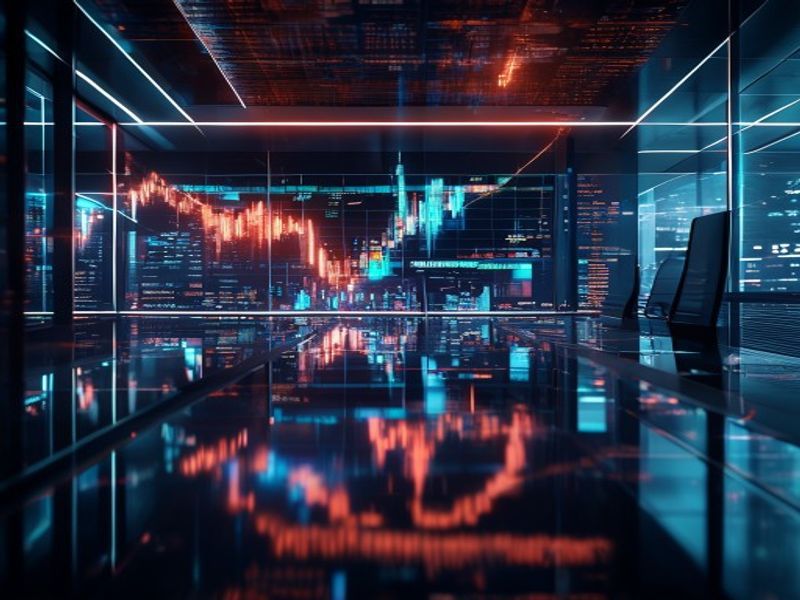
The Rise of Shadow Traders
The era of shouting floor traders in Wall Street is long gone. Today, the pulse of global finance beats within deep-underground server farms. We are witnessing a massive power shift from suit-wearing analysts to complex Python scripts. These algorithms, capable of making decisions in mere milliseconds, have not only conquered the markets but have redefined the very essence of investing.

When Speed Outpaces Logic
High-Frequency Trading (HFT) now accounts for over 70% of transaction volumes in major stock exchanges. These algorithms don't need to read lengthy quarterly reports; they digest market sentiment by scraping tweets and news headlines in a fraction of a second. This hyper-speed has turned the market into a living, breathing entity that feels impossible to tame or predict by traditional means.
Comparison Table: Human vs. AI
| Feature | Human Analyst | AI Algorithm |
|---|---|---|
| Decision Speed | Minutes/Hours | Microseconds |
| Emotional Impact | High (Fear/Greed) | Zero (Pure Logic) |
| Data Processing | Limited Reports | Millions of simultaneous data points |
| Operating Cost | High (Salaries/Benefits) | Infrastructure & Maintenance |

The Dark Scenario: Flash Crashes
The greatest nightmare for economists is the 'Flash Crash'. When algorithms enter a negative feedback loop, the market can wipe out billions of dollars in seconds. This raises a fundamental question: are we building a system that relies on buggy code instead of collective wisdom to sustain itself?
The Future of Markets: Cooperation or Conflict?
The future of global finance lies in equilibrium. AI should serve as an auxiliary tool for identifying opportunities rather than being the sole decision-maker. Retail investors must become more tech-literate than ever before, because in this new game, if you lack speed or alternative intelligence, you might simply become the asset being traded by the algorithms themselves.


Comments