

The Death of Rectangular Screens
2026 marks the end of our dependency on smartphones. New wearable technologies, powered by Multimodal LLMs, have eliminated the need for tactile interaction.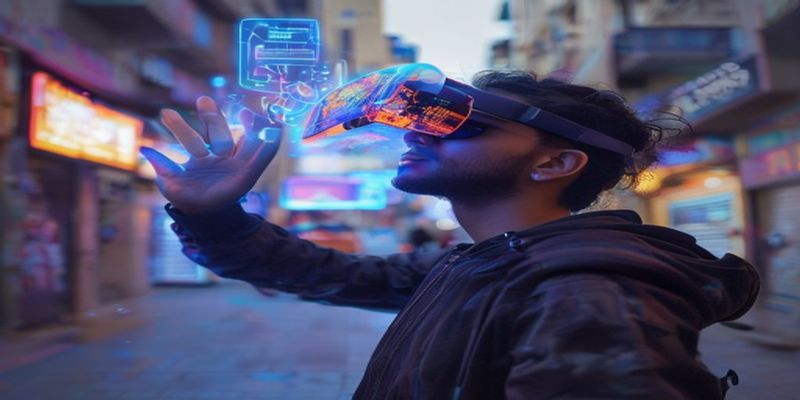 Now, AI understands your environment, projecting information onto your retina or whispering it via bone conduction.
AR Glasses: The True Smartphone Successor
The new generation of glasses produced by leading companies are no longer the heavy, cumbersome tools of the past. They are now as lightweight as standard prescription glasses. In Iran, tech startups have leveraged cloud processing to provide a smooth AR experience even over standard internet connections.| Feature | Smartphone (2020) | Smart Glasses (2026) |
|---|---|---|
| Interaction Type | Touch | Voice & Eye Tracking |
| Weight | 200g | 45g |
| Privacy | App Tracking | Local Edge Encryption |
Market Data Analysis: Global and Iran
The wearables market in 2026 has seen a 300% growth compared to 2024. While smartphone sales have plateaued in saturated markets, wearables have become essential items. In Iran, despite sanctions, access to these technologies has advanced significantly through the localization of software layers and open-source hardware.
Privacy Challenges and Data Security
Shifting power from our pockets to our faces brings new risks. When your glasses are constantly recording, how is privacy defined? Companies now use 'Local Data Protection' to ensure no user imagery is sent to cloud servers. Ultimately, 2026 is the turning point where technology has moved from a 'tool in hand' to a 'layer on reality'. Those who understand this shift early will hold more power in the future.


Comments