
Table of Contents
- 1. The 2026 Reality: Moving Beyond Hype to Structured Autonomy
- 2. The Edge-V2X Nervous System: Moving Beyond Onboard Sensors
- 3. Tehran on the Brink: Semi-Autonomous Corridors and Hybrid Traffic Challenges
- 4. Technical Deep-Dive: LiDAR vs. Neural Radiance Fields (NeRF) in 2026
- 5. Comparative and Statistical Analysis of Smart Transit Architectures
- 6. The Ethical and Algorithmic Dilemma of Urban Space Allocation
- 7. The 2030 Horizon: Absolute Autonomy or Fully Coordinated Cities?
1. The 2026 Reality: Moving Beyond Hype to Structured Autonomy
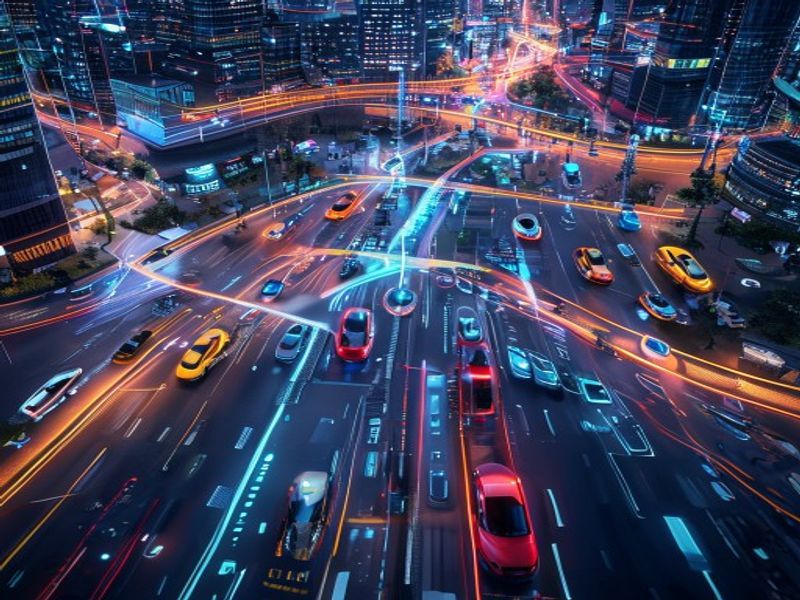
By mid-2026, the debate is no longer about whether autonomous vehicles (AVs) will hit the streets; the core question is how our cities are adapting to these mobile silicon brains. Years of wild optimism during the last decade regarding Level 5 fully autonomous cars—capable of driving anywhere, under any weather conditions—have settled into a pragmatic engineering reality: "Structured Autonomy within Smart Cities."
Today, in June 2026, commercial Level 4 autonomous fleets operate with staggering safety records within geofenced areas, thanks to deep integration with urban infrastructure. This leap forward is a direct result of a strategic shift by major automakers and tech giants from a vehicle-centric model to an infrastructure-centric approach. Leading global metropolises no longer view roads as mere asphalt, but as physical layers of a highly distributed computing network.
2. The Edge-V2X Nervous System: Moving Beyond Onboard Sensors
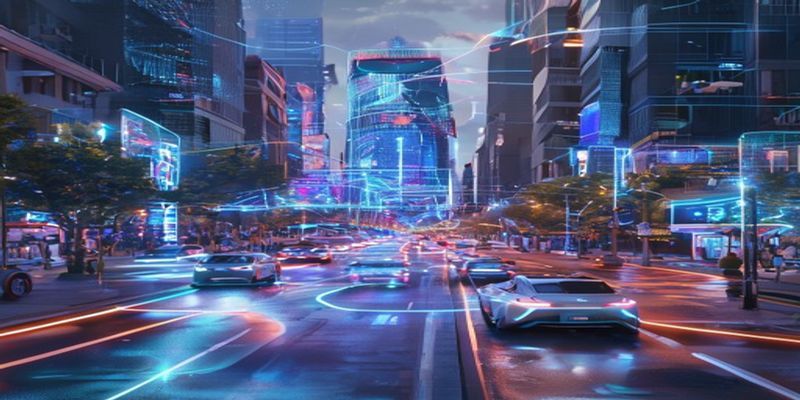
The single greatest technological breakthrough of 2026 is the maturity of Vehicle-to-Everything (V2X) communications powered by Edge Computing. Previously, autonomous vehicles like Tesla or Waymo relied heavily on expensive onboard sensor suites to interpret their immediate environment. This approach was inherently limited by line-of-sight issues—a parked delivery truck at an intersection could easily blind the car's sensors to a pedestrian crossing the street.
Today, with the deployment of 5G-Advanced and early-stage 6G networks, Edge-V2X has eliminated this blind spot. Smart traffic lights and cellular towers equipped with Multi-access Edge Computing (MEC) GPU nodes process environmental data in milliseconds. They compile and broadcast a live, 3D dynamic map of the intersection to all approaching vehicles. An autonomous car knows a pedestrian is stepping off the curb behind a blind corner because the road itself tells it so.
This unprecedented synergy has drastically reduced the need for heavy, expensive onboard computing hardware, paving the way for mass-market, affordable urban autonomous mobility.
3. Tehran on the Brink: Semi-Autonomous Corridors and Hybrid Traffic Challenges
For a sprawling metropolis like Tehran, integrating autonomous vehicle technology presented unique hurdles. Unpredictable driving behavior, millions of motorcycles, and poorly marked roads meant that western autonomous models could not be imported out-of-the-box. However, in 2026, the first phase of the "Tehran Smart Transit Corridor" has successfully launched on the Hemmat and Hakim highways.
Developed through partnerships between local tech startups and municipal infrastructure, the project relies on Dynamic Lane Allocation. During peak hours, specific lanes are dynamically designated via digital overhead gantry signs for autonomous rapid transit (BRT) buses and shared V2X-connected fleets. Roadside sensors monitor human-driven vehicles, feeding real-time proximity alerts to the autonomous fleet to maintain safe buffers. This hybrid approach is Tehran's first major step into the post-driver era.
4. Technical Deep-Dive: LiDAR vs. Neural Radiance Fields (NeRF) in 2026
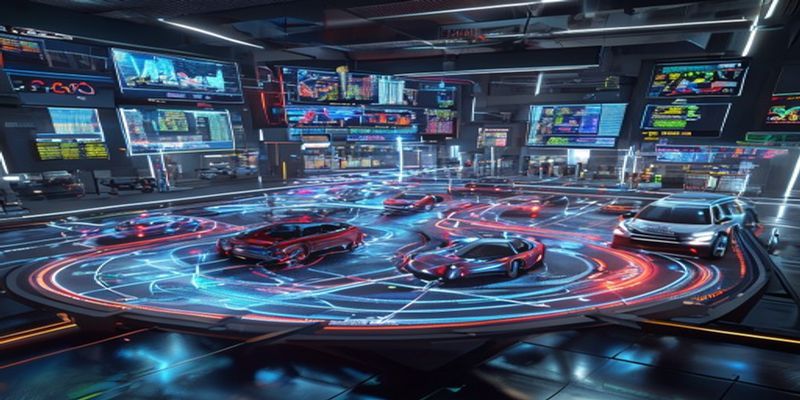
Behind the scenes, a quiet engineering cold war is taking place. Until 2024, LiDAR was considered an expensive, non-negotiable component for Level 4 autonomy. In 2026, the introduction of advanced generative AI vision systems utilizing Neural Radiance Fields (NeRF) and 3D Gaussian Splatting has shifted the paradigm.
Next-generation automotive chips can now take standard video feeds from cheap surround cameras and reconstruct a highly detailed, millimeter-accurate 3D model of the physical environment in real-time. This "neural-only vision" approach has slashed vehicle manufacturing costs by up to 40%. Nonetheless, safety regulators in Europe and China still mandate at least one solid-state LiDAR as a fail-safe backup for extreme weather conditions such as dense fog and dust storms.
5. Comparative and Statistical Analysis of Smart Transit Architectures
To better understand the differences between various approaches to smart city management and autonomous driving in 2026, the following table highlights key performance metrics:
| Metric | Vehicle-Centric (No V2X) | Hybrid Architecture (Limited V2X) | Full Edge-V2X (2026 Standard) |
|---|---|---|---|
| Data Latency | No external communication (50ms onboard) | 15ms to 25ms | < 2ms (Ultra-Low Latency) |
| On-Vehicle Hardware Cost | Very High (> $15,000) | Moderate (~ $5,000) | Low (< $1,500 due to offloaded computing) |
| Adverse Weather Resilience | Moderate (struggles in heavy rain/fog) | Good (utilizes auxiliary data) | Excellent (fully covered by fixed roadside sensors) |
| Urban Road Capacity Boost | ~10% increase | ~30% increase | ~80% increase (safe bumper-to-bumper drafting) |
6. The Ethical and Algorithmic Dilemma of Urban Space Allocation
With hardware challenges largely mitigated, the primary obstacle facing smart cities in 2026 is software-based, ethical, and political. As shared autonomous robotaxis become exponentially more efficient and affordable than human-driven private cars, municipalities face a critical dilemma: how should limited urban space be divided between humans and automated machines?
In cities like Singapore and San Francisco, dynamic traffic allocation algorithms have gone live. These algorithms calculate right-of-way at intersections based on passenger occupancy and trip priority. For instance, an autonomous shuttle carrying 40 passengers is always prioritized over five single-occupancy autonomous cars, receiving instant green lights. However, this has triggered protests from wealthy owners of luxury private autonomous cars, who argue that paying a premium should guarantee faster travel times. This new digital class divide has turned traffic algorithms into highly political battlegrounds.
7. The 2030 Horizon: Absolute Autonomy or Fully Coordinated Cities?
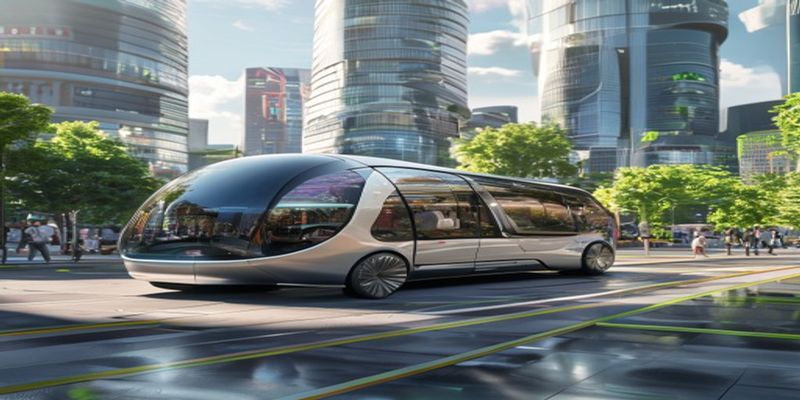
Looking ahead at urban planning roadmaps, it is clear that non-connected, human-driven vehicles will be phased out of major city centers by the end of the decade. By 2030, inner-city zones are projected to ban traditional cars entirely. Smart cities of the future will no longer require vast parking structures; autonomous fleets will operate 24/7, stopping only at peripheral wireless induction pads to recharge.
This transition will not only reduce traffic accidents and emissions to near zero but will also completely redefine the concept of vehicle ownership for future generations. The smart cities of 2026 are just at the beginning of this thrilling, challenging, and irreversible journey.


Comments