

- Introduction: Anatomy of the Emerging Migration Crisis in 2026
- The Digital Identity Trap and High KYC Barriers
- Physical Migration to Secondary Hubs: Analyzing the New Geography
- The Phenomenon of Forced Reverse Migration: Why Some Developers Return
- Collapse of the Domestic Ecosystem: Vacancy of Generals and Dominance of Juniors
- Survival Strategies and New Approaches of Leading Developers
- Future Outlook: Scenarios Leading to 2030
Introduction: Anatomy of the Emerging Migration Crisis in 2026
In June 2026, Iran's technology ecosystem is facing one of its most complex historical periods. If prior to this, the main concern of Iranian programmers for migration was merely obtaining physical visas, booking flights, and relocating to major European or American cities, today in 2026, this equation has completely changed. The emergence of Autonomous AI Agents capable of managing the bulk of software development processes without human intervention has caused a severe thermal contraction in the global job market. Simultaneously, the intensification of international security protocols and shifting migration behaviors have given rise to a new phenomenon we call "invisible migration."
Invisible migration refers to a situation where an Iranian programmer attempts to work in global markets without physically leaving the country, but gets trapped in a digital limbo due to escalating technological walls. On the other hand, those who succeed in physical migration also face unprecedented challenges never before discussed in the literature of elite migration. In this deep analysis, we will explore the various dimensions of this crisis, its geopolitical and technological roots, and its destructive impact on the internal structure of IT in Iran.
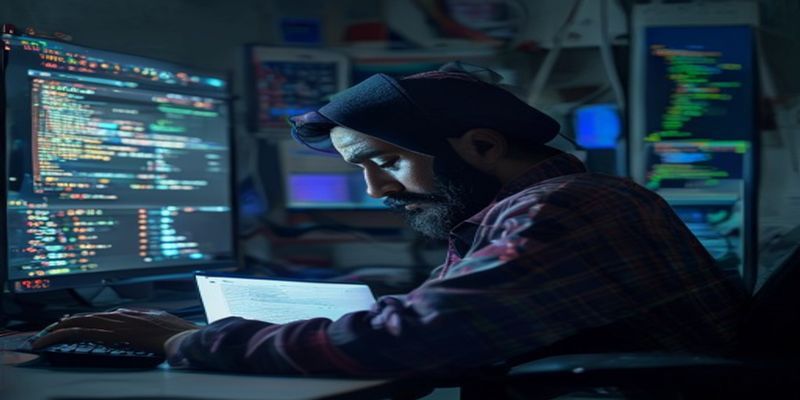
The Digital Identity Trap and High KYC Barriers
One of the biggest challenges for Iranian programmers in 2026 is the issue of "digital identity." With the integration of advanced AI into freelancing and job recruitment platforms such as Upwork, GitHub Jobs, and Toptal, Know Your Customer (KYC) systems have become extremely stringent. These systems now utilize live biometric algorithms, Behavioral Network Analysis, and blockchain tracking to verify user authenticity. Using Virtual Private Servers (VPS) or rented accounts in neighboring countries to bypass sanctions is no longer effective.
AI-powered security systems in 2026 can identify a user's true location with 99.9% accuracy by analyzing typing patterns, activity hours, browser headers, and even millisecond-level network latencies. This has led to the sudden blocking of accounts belonging to Iranian freelancers who relied on these platforms for foreign currency income. The sudden loss of digital assets and unfinished projects has dealt a devastating blow to the livelihood and morale of programmers attempting to offset rampant local inflation with dollar earnings.
Physical Migration to Secondary Hubs: Analyzing the New Geography
As digital borders close and physical migration to Western countries becomes harder due to AI-induced job market saturation, migration paths for Iranian programmers have transformed. Secondary hubs such as Dubai, Istanbul, Belgrade, and Tbilisi have become the primary destinations. However, residing in these regions is not without challenges. High living costs, unstable residency laws for Iranian citizens, and fierce competition with Indian and Eastern European specialists have created harsh conditions.
The table below provides a comprehensive comparison of migration conditions to different hubs in 2026:
| Destination Country | Visa Success Rate (2026) | Relative Cost of Living (Base 100) | AI Displacement Risk | Ease of Sanction/KYC Bypass |
|---|---|---|---|---|
| Germany | 35% (Very Hard) | 85 | Medium (Labor Protection Laws) | Very High (Direct Legal System) |
| UAE (Dubai) | 65% (Medium) | 120 | High (Rapid Automation) | High (Requires Company Setup) |
| Turkey (Istanbul) | 80% (Easy) | 50 | Medium | Medium (Financial Law Volatility) |
| Serbia (Belgrade) | 50% (Medium) | 60 | Low | Medium (EU Supervised) |
As the table indicates, taking refuge in neighboring countries does not necessarily solve all problems. In Dubai, although the visa success rate is relatively high, the exorbitant cost of living practically prevents new programmers from saving money. Furthermore, automation trends in the Persian Gulf countries are being implemented much faster than in Europe.

The Phenomenon of Forced Reverse Migration: Why Some Developers Return
The year 2026 is witnessing a nascent phenomenon known as "forced reverse migration." Many programmers who migrated to Europe or Canada between 2022 and 2024 in hopes of a better life now find themselves in the middle of a massive layoff crisis triggered by the advancement of generative AI. Large Western tech companies have laid off over 40% of their junior and mid-level developers by replacing large development teams with autonomous coding tools.
Migrant Iranian programmers, who usually reside in these countries on employer-sponsored work visas, have only a few months to find a new job after being laid off; a task that seems nearly impossible in today's saturated market. This situation, combined with global inflation and cultural challenges, has forced a significant number of developers to return to Iran. This return is accompanied by severe psychological frustration and a drastic drop in professional status, as the Iranian domestic market also lacks the capacity to absorb these forces with salaries matching their expectations.
Collapse of the Domestic Ecosystem: Vacancy of Generals and Dominance of Juniors
The continuous and organized migration of programming talent over the past years is now showing its destructive effects on Iran's technology ecosystem in 2026. This phenomenon, referred to as the "vacancy of generals," means the almost complete departure of software architects, Chief Technology Officers (CTOs), and senior developers from the country. What remains is an army of junior and inexperienced developers who have taken charge of major national and private projects without the guidance of experienced specialists.
The result of this vacancy is a severe drop in the quality of local software, frequent online service outages, glaring security bugs, and an inability to develop modern infrastructures. To compensate for this deficiency, Iranian companies have turned to the excessive use of copy-paste AI tools, which has led to a horrific accumulation of technical debt in their codebases. This technical debt acts like a ticking time bomb that could at any moment jeopardize the stability of the country's banking, services, and communication systems.
Survival Strategies and New Approaches of Leading Developers
Faced with these multi-layered crises, leading Iranian programmers who have decided to stay or are trapped in digital limbo have adopted new survival strategies. One of these strategies is to focus on deep specializations that cannot be easily replaced by AI. Fields such as advanced cybersecurity, AI Agent Orchestration, decentralized systems development (Web3), and low-level programming optimization are among these career sanctuaries.
Additionally, the formation of underground networks and distributed freelancing groups equipped with Decentralized Identities (DIDs) and payment systems based on privacy-centric cryptocurrencies (such as Monero) has allowed programmers to remain somewhat hidden from the radar of AI-driven KYC systems. Although these methods carry high legal risks, for many, they are the only way to maintain connection with the global economy and earn a fair income.

Future Outlook: Scenarios Leading to 2030
Looking toward the 2030 horizon shows that the challenges of Iranian programmers' migration are no longer a simple labor issue, but have turned into a national security and economic survival challenge. Three plausible scenarios can be envisioned for the future: First, the "complete digital isolation" scenario, where due to the convergence of sanctions and domestic filtering, the connection of Iranian programmers with the outside world is completely severed, turning the ecosystem into an abandoned island. Second, the "adaptation and hub creation" scenario, where the government and private sector, accepting the new realities, establish joint digital free zones with neighboring countries to facilitate international activities.
The third and more likely scenario is "cybernetic coexistence," where instead of trying to physically migrate, Iranian programmers become architects and directors of AI agents, creating value through next-generation decentralized platforms without needing to reveal their geographical identity. In the end, the winners of this game will be those who learn the art of surfing the waves of technological and geopolitical changes, rather than resisting them.


Comments