
Table of Contents
- 1. The Great Decoupling of 2026: Escaping the Hegemony of Western APIs
- 2. Sovereign Cloud Architecture & The Rise of Local Infrastructure
- 3. Geopolitical Startup Divergence: Riyadh, Dubai, Tehran, and Cairo
- 4. Key Performance Indicators of MENA Deep-Tech Ecosystems
- 5. Hardware & Energy Convergence: Solar-Powered Compute Hubs
- 6. Sovereign LLMs & The Digitization of Regional Culture
- 7. The Funding Metamorphosis: Sovereign Wealth Funds and Asset Tokenization
- 8. Horizon 2030: The MENA Tech Bloc as the World's Third Pole
1. The Great Decoupling of 2026: Escaping the Hegemony of Western APIs
In the first half of 2026, the Middle East and North Africa (MENA) startup ecosystem is undergoing an unprecedented paradigm shift. The era of copycat startups—which simply localized Western business models or built basic wrapper interfaces around US-hosted cloud APIs—has officially come to an end. Stricter technological sanctions, aggressive data sovereignty laws in the GCC, and an urgent regional need to optimize water and energy consumption have forced entrepreneurs to pivot toward genuine deep-tech development.
Today, in June 2026, regional startups are no longer passive consumers of foreign technology. The geopolitical frictions of recent years, combined with macroeconomic volatility in non-oil exporting nations, taught the entrepreneurial ecosystem a vital lesson: relying on AWS, Microsoft Azure, and Google Cloud means placing the economic lifeblood of local businesses in foreign hands. In response, a massive infrastructure movement to domesticate data processing and AI modeling has been initiated, led by a new generation of startups leveraging decentralized edge computing and custom silicon.

2. Sovereign Cloud Architecture & The Rise of Local Infrastructure
The single biggest driver of change in 2026 is the implementation of stringent national data residency laws. Saudi Arabia's advanced phases of the Personal Data Protection Law (PDPL) and the UAE's strict federal digital mandates have made hosting sensitive citizen data outside national borders practically impossible. This has opened up a golden market opportunity for local Sovereign Cloud startups.
Instead of purchasing expensive foreign hardware, these startups are utilizing highly optimized edge-computing nodes and domestic processing clusters. In Iran, despite severe international sanctions and network disruptions, infrastructure startups have successfully deployed hybrid cloud solutions to keep critical financial and logistics systems running smoothly. These architectures have not only minimized latency but have also reduced hosting overheads for early-stage companies by up to 40%.
3. Geopolitical Startup Divergence: Riyadh, Dubai, Tehran, and Cairo
By June 2026, the geographical landscape of MENA tech has split into four distinct power hubs, each defined by unique structural strengths:
- Riyadh (Sovereign Capital & AI-First Megaprojects): Backed by the immense power of the Public Investment Fund (PIF), Riyadh has established itself as the capital of regional cloud-compute and deep-tech. Startups here are heavily focused on localized generative AI, smart-grid energy optimization, and smart city infrastructure (primarily integrated with NEOM).
- Dubai (Global Financial Hub & Practical Web3): Dubai remains the premier destination for international talent attraction and global corporate structuring. However, in 2026, the focus has shifted from speculative cryptocurrency projects to real-world asset (RWA) tokenization, Industrial IoT (IIoT), and autonomous port logistics.
- Tehran (Technological Resilience & Infrastructure Engineering): Despite isolation and macroeconomic pressures, Iranian startups have emerged as leaders in developing hyper-optimized local software architectures, edge-AI for medical and mining industries, and decentralized finance. Severe hardware shortages have turned Iranian developers into masters of code-optimization and low-compute execution.
- Cairo (Human Capital Engine & Mass Fintech): Utilizing its massive, highly skilled young demographic, Egypt serves as the regional software factory and the hotbed for inclusive fintech. Cairo-based startups are rapidly expanding their financial inclusion models into Sub-Saharan and North African markets.
4. Key Performance Indicators of MENA Deep-Tech Ecosystems (June 2026 Data)
The following table provides a comparative analysis of the four primary technology hubs in the region based on key 2026 metrics:
| Metric / Tech Hub | Riyadh (KSA) | Dubai (UAE) | Tehran (Iran) | Cairo (Egypt) |
|---|---|---|---|---|
| VC Inflow (USD Billions - 2026 YTD) | $4.2B | $3.8B | $150M (Local/IRR equivalent) | $1.1B |
| Active Sovereign LLMs | 5 State/Private Models | 8 Commercial Models | 3 Academic/Private Models | 2 Dialect-Specific Models |
| Developer Talent Retention Index (Out of 100) | 85/100 | 92/100 | 35/100 | 60/100 |
| Deep-Tech & Hardware Project Share | 45% | 30% | 55% | 15% |
| Primary Funding Source | State-backed Sovereign Funds | Global VCs & Angel Networks | Crowdfunding & Industrial Conglomerates | Multinational Venture Funds |

5. Hardware & Energy Convergence: Solar-Powered Compute Hubs
One of the most critical challenges of scaling large-scale AI models in the Middle East is the extreme consumption of electricity and water (required to cool data centers). In 2026, regional startups realized that traditional power grids could not support the projected density of compute clusters. This realization catalyzed the convergence of hardware design and renewable energy.
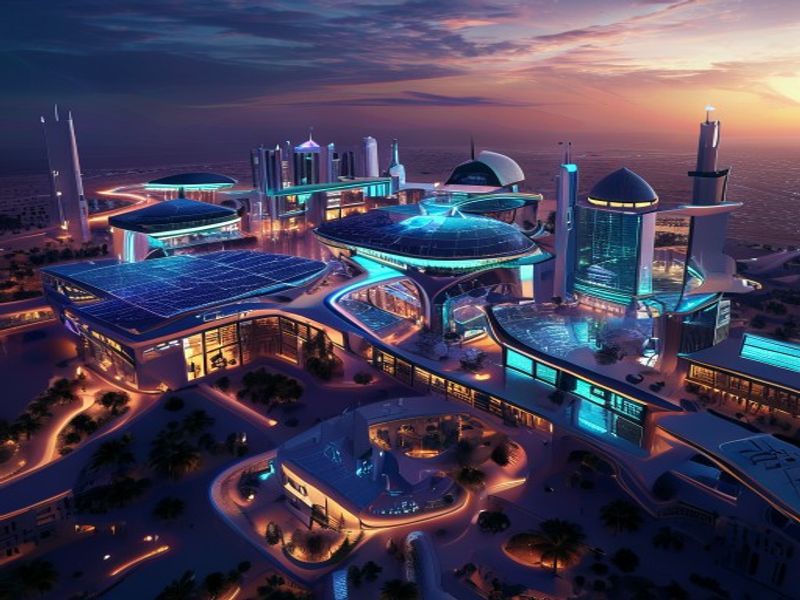
Leading startups in Saudi Arabia and the UAE have developed advanced, nanotechnology-based liquid cooling systems that cut data center water consumption by up to 90%. Simultaneously, a new generation of modular server farms is being built directly adjacent to massive solar parks. Known as "Dynamic Solar Computing," this paradigm allows AI models to schedule heavy training workloads to coincide with peak solar irradiance hours. These hardware innovations have positioned the Middle East as one of the most cost-effective and environmentally sustainable destinations for AI hosting globally.
6. Sovereign LLMs & The Digitization of Regional Culture
By 2026, it became clear that Western foundation models like GPT-5 or Claude 4 were fundamentally limited in their understanding of Middle Eastern cultural nuances, legal frameworks, and linguistic dialects (specifically Persian and complex Arabic variants). This gap gave rise to a regional boom in sovereign Large Language Models (LLMs).
Local startups have trained custom models using curated regional archives, historical texts, legal precedents, and local conversational datasets. Today, these native models are deeply integrated into the Middle East's banking, public administration, and e-commerce ecosystems, boosting public sector productivity by up to 60%. This is not merely translation; it is a total redesign of human-computer interaction rooted in regional cultural values.
7. The Funding Metamorphosis: Sovereign Wealth Funds and Asset Tokenization
The funding mechanics of the MENA startup ecosystem have shifted radically in 2026. While global tech hubs struggle with a prolonged venture capital winter, the Middle East is highly liquid due to robust energy export revenues and aggressive state-mandated economic diversification initiatives. However, the criteria for capital allocation have become much more stringent.
Sovereign wealth funds no longer subsidize cash-burning consumer apps. Instead, they demand hard technology transfer, local intellectual property (IP) creation, and domestic manufacturing commitments. Meanwhile, in countries with capital controls like Iran, startups have turned to Web3-enabled real-world asset (RWA) tokenization and decentralized crowdfunding. In 2026, heavy industrial projects, localized micro-grids, and server farms are routinely funded through tokenized public syndicates, democratizing access to high-yield technology investments.

8. Horizon 2030: The MENA Tech Bloc as the World's Third Pole
Looking forward, the Middle East is rapidly consolidating its position as a sovereign global technology hub, standing independent of the US-China bipolar hegemony. By mastering climate-optimized hardware, training sovereign models, and securing local energy-to-compute supply chains, MENA startups are now exporting technology across Sub-Saharan Africa and Central Asia.
Furthermore, the "reverse brain drain" that began in late 2024 has reached a fever pitch in 2026. Elite Arab, Iranian, and Turkish engineers formerly employed at Silicon Valley conglomerates are returning to the region, drawn by unmatched compensation packages in the Gulf and the opportunity to tackle massive, existential challenges—such as water security and decentralized energy—in their home countries. This inward flow of intellectual capital will serve as the primary engine driving the MENA deep-tech ecosystem for decades to come.


Comments