

- Introduction: The Rise of Hydrogen Superchargers in the Desert
- Geopolitical Anatomy of Green Clouds: Why the UAE and Saudi Arabia Bet Billions on Clean Datacenters
- Cross-Border FinTech Revolution: Bypassing SWIFT with Sovereign Blockchain Settlement Platforms
- Smart Logistics and Autonomous Supply Chain Startups in the Red Sea and Persian Gulf
- The Middle East Digital Divide: Survival Challenges of Iranian Startups Under Sanctions
- Statistical and Comparative Analysis: Key Indicators of Middle East Startup Ecosystems in 2026
- Strategic Outlook to 2030: Scenarios Ahead for Technological Hegemony
Introduction: The Rise of Hydrogen Superchargers in the Desert
In June 2026, the geopolitical map of technology in the Middle East has undergone a fundamental rupture. The era of reliance on traditional submarine fiber-optic cables and fossil-fuel-dependent datacenters is over. Today, in mid-2026, we are witnessing the widespread deployment of sovereign clouds powered directly by massive solar farms and green hydrogen generators in the deserts of Saudi Arabia and the United Arab Emirates. This infrastructural shift, far from a simple environmental transition, has laid the foundation for a new generation of tech startups in the region that have turned speed, security, and data sovereignty into global bargaining chips. This paradigm shift has divided the region's startup ecosystems into two distinct segments: the Gulf Cooperation Council (GCC) countries, fueled by an endless stream of state capital and ultra-advanced cloud infrastructure, and peripheral countries like Iran, Egypt, and the Levant, which rely on local ingenuity and distinct distributed architectures to maintain their position in this new value chain. In this deep-dive analysis, we dissect this infrastructural battle and its tangible impact on the dynamics of the region's startups in 2026.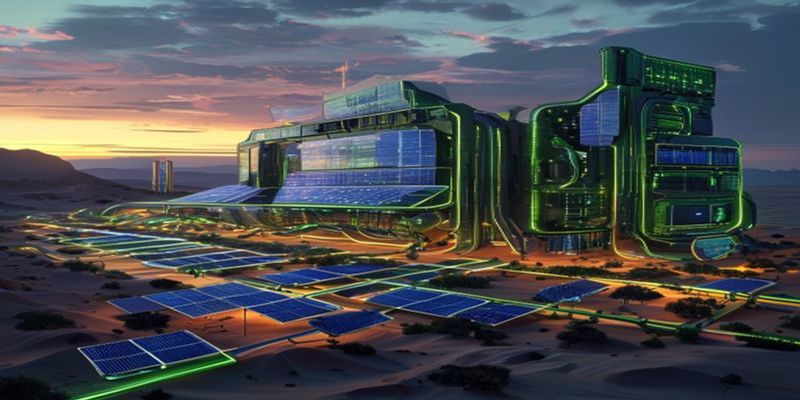
Geopolitical Anatomy of Green Clouds: Why the UAE and Saudi Arabia Bet Billions on Clean Datacenters
Prior to 2026, the biggest challenge to developing indigenous Large Language Models (LLMs) in the Middle East was the staggering energy consumption of datacenters and the region's climatic limitations for cooling these processing monsters. Saudi Arabia, with its NEOM mega-project, and the UAE, with the rapid development of hydrogen infrastructure in Masdar, have completely changed this equation. With the deployment of the first commercial liquid-hydrogen-cooled datacenters on the outskirts of Riyadh and Abu Dhabi, cloud processing costs for local startups have dropped by up to 42%. This novel infrastructure has enabled regional AI startups to train their models in strict compliance with data sovereignty laws without needing to send data to servers in the US or Europe. This has created an unparalleled competitive advantage for local startups in digital health, fintech, and defense. On the other hand, this processing concentration has left other countries in the region without access to these cheap, clean resources at risk of structural backwardness.Cross-Border FinTech Revolution: Bypassing SWIFT with Sovereign Blockchain Settlement Platforms
One of the brightest tech milestones in 2026 is the maturity of multilateral financial settlement platforms based on Central Bank Digital Currencies (CBDCs) in the region. Project Aber, jointly developed by the central banks of Saudi Arabia and the UAE, has now evolved into an open financial hub connecting fintech startups. Fintech startups in 2026 no longer need the slow and expensive SWIFT network for cross-border money transfers; they settle transactions in fractions of a second with near-zero fees on sovereign blockchain ledgers. This phenomenon has spawned a new generation of neobank startups and payment gateways connecting North African and South Asian markets to Gulf financial hubs. For example, startups in Cairo and Karachi can now offer micro-lending services backed by liquidity from investment funds in Riyadh and Dubai—a feat previously impossible due to regulatory barriers and currency fluctuations.
Smart Logistics and Autonomous Supply Chain Startups in the Red Sea and Persian Gulf
Given the ongoing geopolitical tensions in the region's waterways, supply chain security and efficiency have become top priorities for governments and industries. In 2026, Middle East logistics startups have moved toward full automation by leveraging next-generation Internet of Things (IoT 2.0) and low-Earth-orbit satellite communication networks. Smart ports like Jebel Ali in Dubai and King Abdullah Port in Saudi Arabia are now managed entirely by AI algorithms that optimize ship movement and cargo unloading. Startups in this space have succeeded in developing supply chain crisis-prediction platforms, coordinating alternative land and rail routes in the shortest possible time. This smart coordination has reduced transit costs across the Arabian Peninsula by up to 30%, making the Middle East the world's most efficient transit hub in 2026.The Middle East Digital Divide: Survival Challenges of Iranian Startups Under Sanctions
While the southern Persian Gulf is awash in cloud infrastructure and investment flows, Iran's startup ecosystem in 2026 is facing one of the most complex periods of its existence. Ongoing international sanctions, lack of direct access to advanced GPUs (such as Nvidia's latest generations), and domestic internet challenges have forced Iranian entrepreneurs to adopt highly creative survival strategies. Instead of developing massive, centralized LLMs, Iranian startups have focused on Federated Learning techniques and highly compressed local models that can run on more modest hardware. In fintech, despite complete isolation from global financial systems, a network of local decentralized exchanges and peer-to-peer (P2P) cryptocurrency trading platforms has emerged, covering most of the transaction needs of small and medium-sized private enterprises. This technological survival demonstrates the high resilience of specialized human capital in Iran, although the continuous migration of talent remains a serious structural threat.
Statistical and Comparative Analysis: Key Indicators of Middle East Startup Ecosystems in 2026
To better understand the dimensions of this infrastructural shift, the following table provides a comprehensive comparison of key startup ecosystem indicators for major regional countries in the first half of 2026:| Country | Active Datacenter Capacity (MW) | VC Funding Raised ($ Billion - H1 2026) | Primary Startup Tech Focus | Blockchain Penetration in Gov Transactions |
|---|---|---|---|---|
| UAE | 850 (70% Hydrogen/Solar) | 4.8 | Sovereign AI, Cross-Border FinTech | 85% |
| Saudi Arabia | 1,200 (65% Hydrogen/Clean) | 6.2 | Autonomous Logistics, Smart City Mega-projects | 70% |
| Iran | 180 (Natural Gas & Grid-based) | 0.15 (Domestic/National) | Distributed Platforms, Decentralized FinTech | 15% (Informal/Private) |
| Turkey | 450 (Hybrid-based energy) | 2.1 | Gaming, Deep E-commerce, Drone Aviation | 40% |
| Egypt | 300 (Mostly Fossil-based) | 1.2 | Inclusive FinTech, African Logistics | 30% |


Comments